How to Get a Job
Secure Your Dream Job in Any Industry You Love (With Best Job Skills)
If you want to outshine your competition and finally get your dream job, you are in the right place. In this article, we will explore the definition and importance of job skills and how you can impress employers with the right mix of soft skills (and hard skills).
Written By Ita John
Founder, CVJury
Published 2 April 2024Updated 13 October 202618 min read

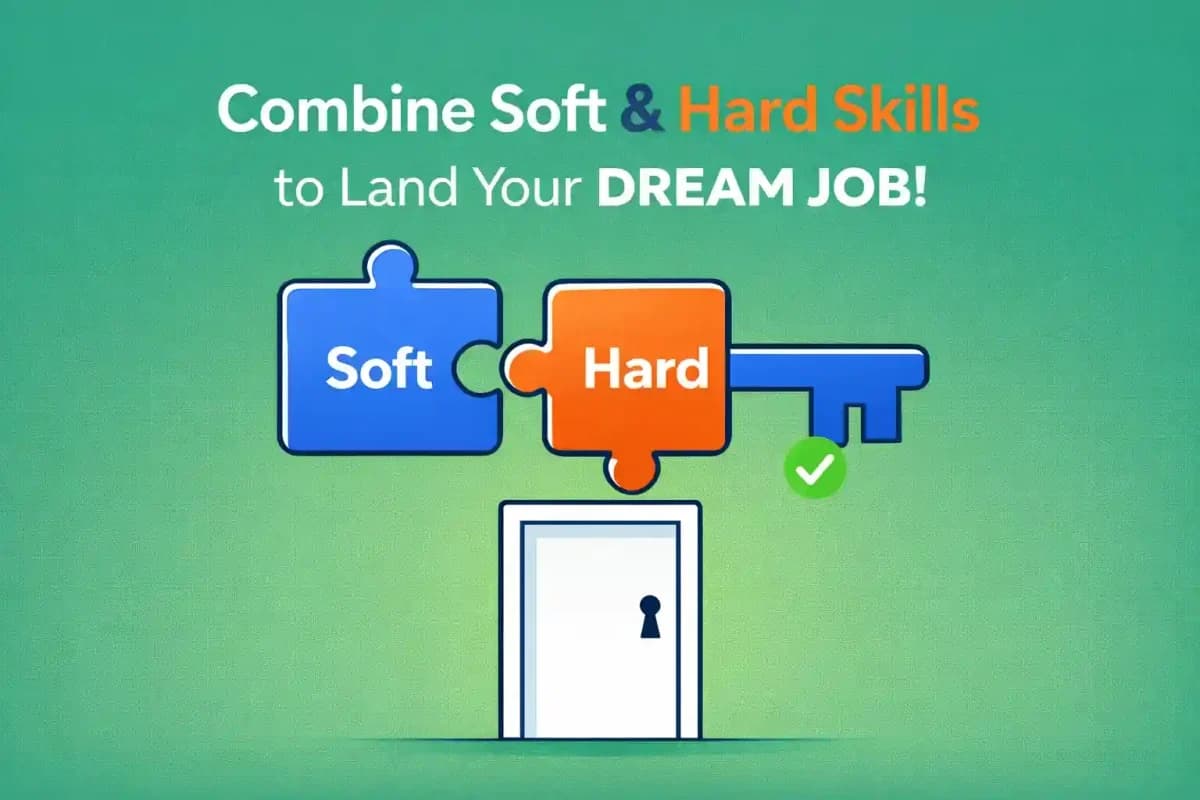
If you want to outshine your competition and finally get your dream job, you are in the right place. In this article, we will explore the definition and importance of job skills and how you can impress employers with the right mix of soft skills (and hard skills). But it doesn't stop there. We will also show you how to strategically incorporate these impressive skills into your resume and demonstrate your suitability for collaborative work environments. We aim to help you stand out from the competition and catch any hiring manager's attention with a personalized touch.
First Step to Career Success: Flaunt Your Key Job Skills
You finally graduated. Oh, happy day! Emotions of thrill fill the air as tears of joy trickle down your cheeks.
Your family and friends warmly embrace you with smiles on their faces. This is undoubtedly one of the best days of your life. If wishes were horses, you could live in the moment forever.
But then, reality check hits, and you ask yourself: What next?
It's time to begin your job search and land that dream job.
To make this happen, you must prepare an irresistible resume, knock the socks off any recruiter during a job interview, and step into the career path of your dreams.
I know, it's easier said than done. This is true for most things in life. But you've just spent at least four years in college training for this moment.
You have essential skills. Now is the time to put them into play.
In the dynamic world of many job opportunities, your abilities, talents, and top skills are keys to unlocking the doors to a successful career.
The job market is fiercely competitive, and possessing the right skills has become more critical than ever.
But what are the right skills? They are your unique blend of abilities, knowledge, and expertise.
They help you stand out from the crowd and prove that you are what the employer requires.
Thankfully, this article is all about valuable job skills and how you can wield them effectively to take your career to new heights.
As you keep reading, you will learn the following:
- What Are Job Skills?
- The Categories of Job Skills
- The Significance of Job Skills
- How to Incorporate Job Skills in Resumes (How and Where?)
- How to Tailor Transferable Skills to Match Job Requirements
- Critical Job Skills Employers Look For in Different Industries (Example of Crucial Hard Skills)
- The Top 10 Soft Skills for Leading Jobs in 2026
- The Top 10 Technical Skills in Demand in 2026
- 10 Emerging Technical Skills in 2026
- How You Can Find Job Skills in Job Postings
- How You Can Develop Job Skills to Advance Your Career
- And other insightful details
Ready to delve deeper into the world of job skills? Let's get started with the basics.
What Are Job Skills?
Job skills combine various skills or abilities that help you deliver results. These skills are the must-have skills employers look for before determining if a candidate is a good fit for a vacant role in their company or organization.
The Significance of Job Skills
Job skills are essential for the following reasons:
- Possessing the right job skills makes you an appealing job applicant in the eyes of employers.
- Job skills make your cover letter, CV, and resume stronger.
- Knowing you have the best skills for a vacant role boosts your approach and confidence at the interview stage.
The Categories of Job Skills
Recruiters in different industries look for two categories of job skills in job applicants: soft skills and hard skills.
Hence, you can only win their hearts with the right mix of both worlds.
Also, note that soft and hard skills, well-suited to many jobs and different industries, are transferable skills.
Now, let's focus on the difference between soft and hard skills.
Understanding their differences will help you recognize your outstanding skill set and how to use it practically.
What Are Soft Skills?
Soft skills are personal characteristics that relate to your approach to work and daily interaction with people within your work environment. Soft skills are also known as:
- People skills
- Personal skills
- Workplace skills
These relevant skills are unique because they depend on your habits and personality at home or work, and your response to life experiences.
They also serve as indicators to hiring managers looking for suitable candidates who can complement their existing staff or fit their company culture and work ethic like a glove.
Hiring managers believe that soft skills are tone-setters that can rub off on others in the office. Therefore, they make this a priority before opting for any candidate.
Examples of Key Soft Skills
You can edge out other job hunters and win the hearts of employers when you have these soft skills:
1. Communication Skills
Effective communication is at the heart of businesses, industries, and organizations. Hence, you must be an excellent communicator when you speak, write, or listen. Being concise and focused is vital, as is tailoring your message to the audience, knowing what to say, how, and when to say it. Communication skills you need in most jobs include:
- Active listening
- Confidence
- Discussion
- Negotiation
- Non-verbal communication
- Oral and written communication
- Persuasion
- Presentation
- Public speaking
2. Management Skills
Management skills are soft skills that help you to effectively handle resources, individuals, and situations that may arise in your day-to-day operations. Here are some highly sought-after management skills:
- Action planning
- Conflict resolution
- Logistics
- People management
- Project management skills
- Risk management
- Time management
3. Problem-Solving Skills
Problem-solving skills involve the successful identification of a problem and the appropriate application of knowledge to rescue the situation. The ability to get problems solved improves your chances of getting the job. Every employer needs a problem solver they can turn to for answers or creative solutions when the chips are down. Position yourself as one by demonstrating these problem-solving skills:
- Analytical skills
- Attention to detail
- Calculated risk-taking
- Creativity
- Critical thinking
- Curiosity
- Decision-making skills
- Experimentation
- Innovation
- Research skills
- Resourcefulness
4. Leadership Skills
Leadership is an essential soft skill for workplace success. It involves possessing a vision, developing a team, and effectively driving the team to achieve that vision. As a leader, you're responsible for motivating your colleagues or fellow professionals to pull off outstanding achievements, regardless of the challenges. Here are some leadership skills that come in handy at the workplace:
- Coaching/Mentoring
- Commitment
- Confidence
- Dependability
- Influencing
- Integrity
- Motivation
- Passion
- Proactivity
- Relationship-building
- Resilience
- Responsibility
- Results-oriented
- Strategic thinking
5. Organizational Skills
You must effectively organize and track progress to succeed at your work while juggling other responsibilities. Organizational skills encourage productivity in the workplace and save companies money and time. Excellent organizational skills include:
- Delegation
- Goal setting
- Multi-tasking
- Physical organization
- Planning
- Prioritization
- Scheduling
6. Customer Service Skills
Customer service skills are people skills that help you meet customers' needs and provide a pleasant customer experience. You need to make customers or clients in need of your services feel at home by exhibiting these skills:
- Active listening
- Attention to detail
- Emotional intelligence
- Empathy
- Negotiation skills
- Patience
- Persuasion skills
- Product knowledge
7. Adaptability
Employers prioritize adaptable candidates who can work independently or well in a team, even in complicated situations. Adaptability while delivering your duties requires:
- Calmness
- Consistency
- Distraction elimination
- Enthusiasm
- Focus
- Flexibility
- Growth mindset
- Inspiration
- Mindfulness
- Optimism or positivity
- Patience
- Persistence
- Situation assessment
- Work balance
- Unrelenting drive
8. Interpersonal Skills
Interpersonal skills are soft skills that help you interact or network well with people you come in contact with (individuals or groups). These skills help you establish and sustain relationships at your workplace:
- Emotional intelligence
- Empathy
- Interaction
- Open-mindedness
- Teamwork or collaboration
The Top 10 Soft Skills for Leading Jobs in 2026
Here are the top 10 in-demand soft skills required for leading jobs in 2026:
- Collaboration
- Communication
- Flexibility
- Influencing
- Innovation
- Mentoring
- Multi-tasking
- People management
- Problem-solving
- Time management
Why Are These Soft Skills Important in Your Resume?
Why are people skills a big deal to potential employers when handpicking the perfect fit for their company or organization? Here are 10 reasons soft skills are essential to these decision-makers:
- Indicate your openness to accomplishing great things when you collaborate with colleagues or other workers in a team.
- Give signs that you will be a valuable asset to the company's workforce for a long time.
- Show your interest in building relationships with coworkers, business partners, and clients.
- Emphasize your ability to maintain relationships without falling out.
- Communicate your willingness to grow and improve your skill set.
- Show your drive to seize the initiative during a challenge, inspire or motivate coworkers, and make people work gleefully on tedious tasks.
- Reveal your ability to manage time, pay attention to detail, and stay organized.
- Indicate your potential leadership qualities.
- Emphasize your ability to give the company a positive reputation during interactions with existing and potential clients.
- Highlight your ability to complete tasks, exceed expectations, handle the pressure of multiple responsibilities, or pull off surprises.
What Are Hard Skills?
Hard skills, also known as technical skills, are specific abilities, skill sets, and technical knowledge that help you handle job-related responsibilities. They are your proof of competency and expertise. These skills are teachable. You can acquire or learn them via:
- Apprenticeship
- Certification programs
- Hands-on training
- On-the-job training
- Online courses
- Reading relevant books
- Schooling
- Trial and error
- Work experience
Critical Job Skills Employers Look For in Different Industries (Examples of Crucial Hard Skills)
Below are crucial hard skills relevant to different industries:
1. Computer Skills
Computer skills refer to your ability to use different digital devices and related technologies to execute daily workplace tasks. Here are a few beneficial computer skills worth having:
- Basic HTML (Hyper Text Markup Language)
- CMS (Content Management System)
- Database Management
- Design Skills
- Equipment Installation and Configuration
- Internet Savviness
- Quick Typing
- Presentations
- Programming
- Social Media Management
- Troubleshooting
2. Data Analytics
This is a science that requires analyzing raw data or statistics to draw actionable, meaningful conclusions or insights. Data analytics involves the following skills:
- Creating Dashboards and Reports
- Database Management
- Data Visualization
- Data Cleaning and Preparation
- Data Analysis and Exploration
- Ethical Judgment
- Machine Learning
- Math
- Microsoft Excel
- Programming
- Statistical Analysis
3. Search Engine Optimization (SEO)
Search Engine Optimization improves website visibility and ranking on various search engines, including Google, Bing, and YouTube. An expert must possess these skills:
- Conversion Rate Optimization
- Google Analytics Skill
- Google Search Console Skills
- Hands-on Experience With Essential Tools
- Keyword Research Skills
- Link Building Skills
- Local SEO Skills
- Mobile SEO Skills
- On-page SEO Skills
- Technical SEO Skills
The Top 10 Technical Skills in Demand in 2026
Here are 10 technical (hard) skills required for in-demand positions in 2026:
- Data Analysis
- Full Stack Development
- Finance (Accountant)
- Food Service Management
- Healthcare/Medicine
- Language skills
- Mobile App Development
- Robotic Process Automation
- Social Media Marketing
- Software Development
10 Emerging Technical Skills in 2026
Here's a sneak peek into tomorrow's job market. Explore these emerging skills with promising benefits, career opportunities, and growth potential:
- Artificial Intelligence (AI) and Machine Learning (ML)
- Blockchain
- Cloud Computing
- Cybersecurity
- Data Engineering
- Data Science
- DevOps/Agile Methodologies
- K-12 Education
- Natural Language Processing
- UI/UX design
Why Are These Hard Skills Important in Your Resume
Employers are only interested in candidates with hard skills that can help them get the expected results. Therefore, you have to look the part. Here are three reasons why having the right hard skills in your resume can change the game for you:
- Shows you can increase the productivity level in any work environment
- Highlights your desire to solve problems
- Emphasizes your proficiency
Assessing Your Job Skills
Here's how you can assess your hard or soft skills:
How to Assess Your Soft Skills
Use these tips for your soft skills assessment:
- List the workplace skills that can help you perform better at work.
- Rank each workplace skill from your most vital to your weakest.
- Picture a real workplace problem or situation and identify the required key skills.
- If you lack the particular skill(s) to handle the situation, consider developing them.
How to Assess Your Hard Skills
Here are the steps to take for your hard skills assessment:
- Check if you possess the right qualifications, certifications, and licenses for a particular job.
- Partake in custom assessment programs to test your knowledge of the job.
- Take skills tests that simulate workplace scenarios and require you to put your skills to work.
How to Combine Soft and Hard Skills for Career Advancement
Soft skills and technical skills work in tandem to ensure your career advancement. You shouldn't possess impressive hard skills and fall short in your soft skills, and vice versa.
Your hard skills help you gain employment, while your soft skills determine your employability.
Hence, if you desire to advance your career and make your dreams come true, you must combine many skills and get the right mix.
Developing or sharpening your soft and hard skills is the best way to achieve this.
Picture your next job as a learning curve. Make bold moves and try new things.
For instance, you can volunteer to lead a team of designers in creating a client's brand identity.
This way, you can sharpen your design skills and build valuable soft skills like active listening, delegation, leadership, mentorship, and teamwork.
In the long run, you'll have a wide range of top skills, including transferable skills, that will make you valuable when you move from one job to another or a new industry.
Hence, you can easily convince employers that you can deliver the goods without sacrificing quality, and even outperform expectations.
How to Find Job Skills in Job Postings
You shouldn't have problems finding the soft and hard skills highlighted by a company in their job posting if you follow these tips to the letter:
How to Spot Soft Skills in Job Postings
Many employers mention specific soft skills in job applications’ "desired" or "required" sections. Therefore, it is advisable to examine them closely before sending them.
How to Spot Hard Skills in Job Postings
They are usually listed in the "requirements" section to emphasize the most relevant job-specific skills a candidate must possess. You can’t miss them once you open the job listing.
How to Incorporate Job Skills in Resumes (How and Where?)
Including several skills on your resume is an excellent idea. However, there are right and wrong ways of doing this. Let's go ahead and take you down the correct route.
How to Add Hard Skills to Your Resume
First, create a skills section at the side or top of your resume. Now, all you must do is mention your hard skills based on the recruiter's job requirements.
Additionally, you can include certifications, licenses, and a list of skills applicable to the job.
How to Add Soft Skills to Your Resume
Your soft skills should also feature in the skills section immediately after you mention the sought-after hard skills.
This is a surefire way to draw any hiring manager's attention to your other relevant skills.
Here's an example of how your skills section should look:
Technical Skills:
- Basic HTML
- CMS
- Database Management
- Equipment Installation and Configuration
- Quick Typing
- Internet Savviness
- Social Media Management
Additional Skills:
- Strong collaboration skills
- Excellent communicator
- Highly empathetic
- Problem-solver
- Motivated and passionate
How to Tailor Transferable Skills to Match Job Requirements
After reading through a job description, you might have noticed that some transferrable skills you learned from part-time or summer jobs can help you function and succeed. In this case, demonstrate how to transfer these skills to benefit you in the open position. Include this information in the summary section.
How to Optimize Your Skills Section for Applicant Tracking Systems (ATS)
Employers in today's fast-paced world use Applicant Tracking Systems to help them handle thousands of job applications and rule or screen out the least qualified candidates.
ATS software uses an algorithm that scans resumes and identifies suitable candidates using job-specific or job-relevant keywords. So, ensure that you hit the right notes.
Use the following steps to develop an ATS-friendly CV or resume:
- Look for a job posting that suits you and study the job description.
- Put yourself in an employer's shoes. See what reasons they may have that would disqualify you from consideration.
- Use a clean resume layout that is easy to scan.
- Use the chronological resume format.
- Match the skills you developed in a work situation with the competencies listed in the job description. Use examples to justify the relevance of skill sets if the advertiser did not mention them in the ad.
- Do not exaggerate — overstating your skills will get you rejected for having too low an aptitude in reality.
- Be confident when creating your CV. For example: "I just received an award for my XYZ, and I’m known for coming up with new ideas to solve problems in the workplace."
Want to perfect your resume or build an ATS-friendly resume from scratch? Use this free Online Resume Builder created by a certified professional resume writer.
Continue Reading: The Essential Job Skills
How to Write a Resume Recruiters Love: A Step-by-Step Guide For 2026. How to get a job without applying on job boards. How to write a resume like a guru.
How You Can Develop Job Skills to Advance Your Career
Finally, you got the job. Great! However, you can't rest on your laurels if you want to advance your career, keep employers on board, or get a promotion or pay raise. Instead, ensure that you sharpen your existing skills and create room to learn skills via these different routes:
Learn from Others: The Value of Industry-Related Mentorship
As the name suggests, an industry-related mentor is an experienced professional or veteran who knows the ins and outs of your industry. They teach and give you efficient advice that fast-tracks your career path and prevents you from making regrettable decisions. Find a suitable mentor, contact them, and build a professional relationship. You will be glad you did.
Pursue Continuous Education and Training
Learning more about your industry or sector operations is essential in any thriving workplace. These details are the keys to opening the doors of career success, irrespective of your degree (Master's or PhD). Furthermore, you must understand the company's purpose, products, and market position. You can get this much-needed information if you are willing to learn and open to professional training recommendations, including available company training. Don't relent. Always welcome new developments related to your field with open arms.
Use Online Resources for Skill Enhancement
Leverage the online resources within your arm's reach to improve your skills or acquire new ones. They can help you become the irresistible employee every employer wants or doesn't want to let go of. You're one Google search away from finding online degree programs or beginner courses that can improve your existing skills or add more relevant job skills to your arsenal. Access and use them to your advantage.
Practice and Apply New Skills Regularly
Learning a new skill will count for nothing without application. So, always set time aside daily to practice what you know. It will do you a world of good. As they say, "practice makes perfect." So, you won’t have to dust off cobwebs when you need to showcase your skill diversity because you’ve been practicing consistently.
Seek Feedback and Improve Constantly
Ask your colleague or superior for feedback regularly. This will help to pinpoint your areas of strength (what you're doing well) and weakness (where you fall short). After identifying your weakness, develop integral skills so that they become one of your strengths.
Show Your Job Skills: Become the Most Valuable Asset
At this point, you've discovered all there is to know about job skills. Now, it's up to you to use this information to advance your career and enjoy success in your chosen profession. Go ahead and leverage your most relevant skills to give you a greater chance of reaching for the stars. CVJury is rooting for you. Do you think this helps? Please reach out to us. We look forward to hearing your success story.
1. Draw Closer to Positive Co-Workers
As a newbie, expect to meet two kinds of co-workers in your new place of work: the complainers and the passionate ones. In your early days on the job, it will help if you identify these two groups of workers. All you need to do is listen and observe. It is almost always apparent. When you do, avoid the complainers and slackers at all costs and associate with passionate workers. They help boost your zeal for the new job and help you avoid getting into trouble.
2. Ensure You Impress Your Supervisor
You should meet and exceed your supervisor's expectations at this job stage. Trust us; gaining their admiration at the beginning will help your relationship with them in the long run. Try to assess what works best for them and follow suit. Follow their directions, study past projects, and confidently ask co-workers for tips on meeting the boss's expectations.
3. Don't Be Afraid to Ask for Assistance
Yes. If you need help carrying out a task in your new role, ask for it. While showing that you know your stuff is good, rookie mistakes can be detrimental and may lead to losses. Asking questions or for assistance only shows you are human and trying to learn on the job. Remember, passionate colleagues don't hesitate to ask for their assistance when necessary. After all, nobody knows everything, so resist the urge to want to outdo yourself constantly.
4. Be a Team Player
Displaying a team spirit will help you blend in well in your new job. Most of the tasks you carry out will involve you being a part of a team. Make sure you liaise with your team to get the job done. Do not be a lone ranger. Even if you can carry out tasks without help, once in a team, endeavor to collaborate with them. Also, remember to show loyalty and give credit when necessary, as this will help you gain the trust of your co-workers.
5. Be Very Friendly
You may be the newest person on the block, but being friendly makes you blend into the system with rocket speed. You may begin with something as simple as making sure to know the names of your co-workers. Inculcate the habit of calling them by their names. It gives off the vibe that you are one of them already and makes relating to them quick. Knowing a person's name is one of the easiest ways to get their attention and connect with their individuality. Another effect this will have is that they will feel respected and influential, especially your team members. Another way of being friendly includes a genuine smile. Yes, genuine, because people are not dumb; they will see through fake smiles. So, learn to smile from the heart.
6. Be Proactive
As you begin your new job, expect to receive 'unsophisticated' tasks. Be diligent in carrying out these tasks and, more importantly, be a self-starter. We mean taking the initiative and asking for new challenges instead of always waiting for instructions. Only a few companies employ workers to tell them what to do. Most companies appreciate workers who are smart enough to take the initiative.
7. Be Punctual
When new on the job, punctuality is an important parameter. Are you a go-getter or just another uninspired, lazy employee only there for the paycheque? Even for old workers, punctuality is crucial, but how much more is it for a newbie? Endeavor to be one of the earliest employees to get to work. It not only shows enthusiasm and seriousness, but it also proves that you are ready to work hard. Finally, you should be open-minded and ready to learn, unlearn, and relearn. That's the whole essence of life. Being the newest member of any organization can be as exciting as daunting. But we are here to guide you every step of the way.
Things to Do When You Start a New Job
- Smile and greet everyone you meet. A kind greeting will communicate that you care about them, their work, and the company they've chosen to work for.
- Listen attentively. When someone is talking, use eye contact, lean in if possible, and don't interrupt with your own story. The person might want to tell you their story rather than have you tell them yours.
- Learn to be patient while others are speaking — this is also important for being a good listener during meetings or presentations. It tells the speaker they matter and will help them feel supported throughout the interchange.
- Speak up! Silence isn't golden when it comes to accomplishment in any endeavor. If you need help or have an idea, let people know.
- Stay organized.
- Be friendly, but don't be too familiar.
- Remember that your manager is your boss, and treat them accordingly.
- Always do what you say you'll do and follow company guidelines without question.
- Take leadership roles if the employer asks, or volunteer to take on more responsibility in work projects or meetings.
- Avoid any behavior that might give management the impression you are not a team player. Examples include not asking for clarification, being argumentative, and monopolizing others' time during meetings.
Want to get more interviews? Learn how to write a resume like a guru. Congratulations once again on your new job!
About the author
Ita John
Founder, CVJuryDr Ita John founded CVJury in 2022. He previously worked as an IT recruiter in the London market for nearly seven years at Star Jobs Recruitment and founded the NECareersConnect careers platform. He brings experience in recruitment, practical project management, and business development. Earlier in his career, he taught business and economics at Oxford Brookes University and in Nigeria for over a decade. He lives in England with his wife and three sons. He earned a PhD in Entrepreneurship, International Business, and Economics from Oxford Brookes University. See how his background shapes the work he does for you. Read his story..
Connect
 LinkedIn
 Happenstance
